JOURNAL · SOURCING & PRODUCTION
How to Vet an Apparel
OEM/ODM Partner in China
Eight practical checks for growing brands comparing product capability, minimums, sample development, material control, quality management and production accountability.
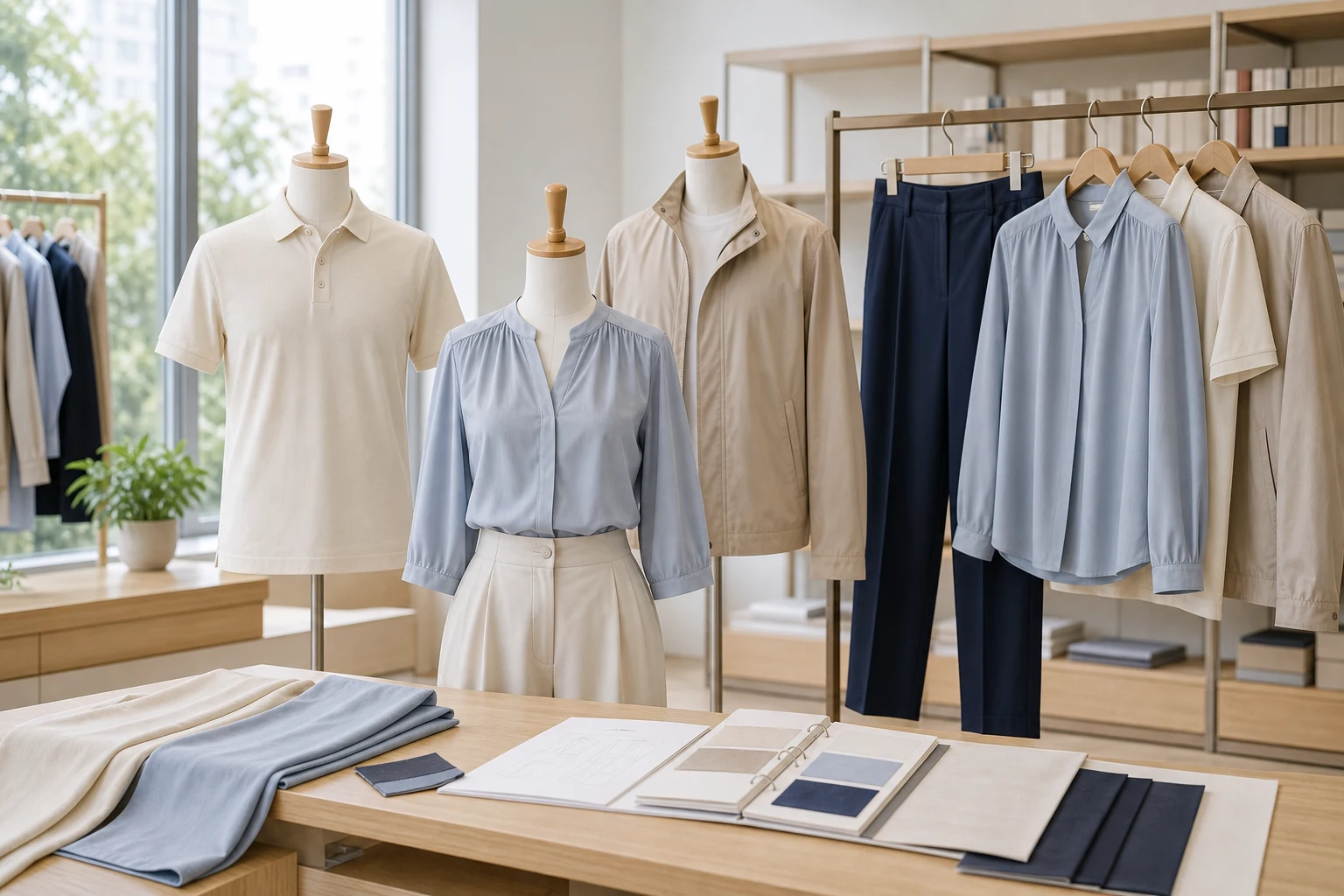
The right production partner does more than quote a unit price. They help turn design intent into repeatable garments—and make constraints visible before they become problems.
Selecting an apparel manufacturer overseas is rarely a matter of choosing the lowest price. A low quotation can become expensive when specifications are unclear, materials change without approval, samples do not translate into consistent bulk production, or a launch misses its selling window.
For a growing fashion label, a production partner becomes an extension of the product team. They must understand what the garment is meant to be, identify practical risks, keep material and construction decisions traceable, and communicate clearly from the first review through final inspection.
If you are evaluating an apparel OEM manufacturer in China, the following eight checks will help you compare capabilities and working methods before approving a sample or committing to bulk production.
1. Define the Support You Need: OEM, ODM or Hybrid
OEM and ODM are useful starting points, but many real projects sit between them. What matters is defining what your brand will provide and what the manufacturing partner is expected to develop.
Production to specification
Your team provides a developed tech pack, measurements, construction details and approved artwork.
Shared development
You provide sketches, reference garments or key measurements; the partner helps turn them into production-ready details.
Broader development support
The partner contributes more actively to product development, materials and workable construction options.
A good initial review should tell you whether your files are ready for sampling or whether important decisions are still missing. Reference images may be enough to begin a feasibility conversation, but dimensions, materials, construction and finishing still need to be agreed before bulk production.
2. Verify Genuine Product-Category Alignment
Apparel production is not one interchangeable skill. The materials, machines, construction knowledge and finishing required for a jersey polo are different from those required for a woven dress or a padded jacket.
Jersey & fleece
T-shirts, polos, sweatshirts, hoodies, dresses and relaxed casualwear require reliable control of stretch, seam recovery, rib tension and shrinkage.
Shirts & separates
Shirts, blouses, trousers, dresses and lightweight jackets depend on accurate patterns, stable fusing, clean pressing and precise construction.
Padded & down
Insulated garments introduce additional material, filling, lining and construction requirements that should be reviewed before quotation.
Ask for evidence that relates to your product type—not simply a broad factory presentation. If one collection combines cut-and-sew tops, woven trousers and outerwear, ask how those categories will be allocated and who will maintain one approved standard across the project.
3. Understand What a “100-Piece MOQ” Really Means
A low MOQ is useful only when the material and design plan supports it. Although a sewing line may be able to make 100 garments, fabrics, colours, zippers, labels and packaging can each have separate minimums.
Confirm whether 100 pieces can be divided across colours and sizes. Too many colourways can make a small order inefficient.
In-stock and regularly available fabrics are often more practical for a 100-piece run than custom knitting or dyeing.
Custom zippers, hardware, labels and packaging may carry minimums that are higher than the garment order.
For repeat programmes, brands may choose to purchase certain trims in a larger quantity and use them across later releases.
At RÊVE JARDIN, production can generally be discussed from 100 pieces per style, subject to the product design and material conditions. A responsible low-MOQ proposal explains what is workable at that volume and where a standard fabric, colour or trim may be the better choice.
4. Evaluate the Sample-Development Process
A sample is not only a visual prototype. It is the point where the team tests whether the proposed pattern, measurements, fabric and construction can become a repeatable bulk product.
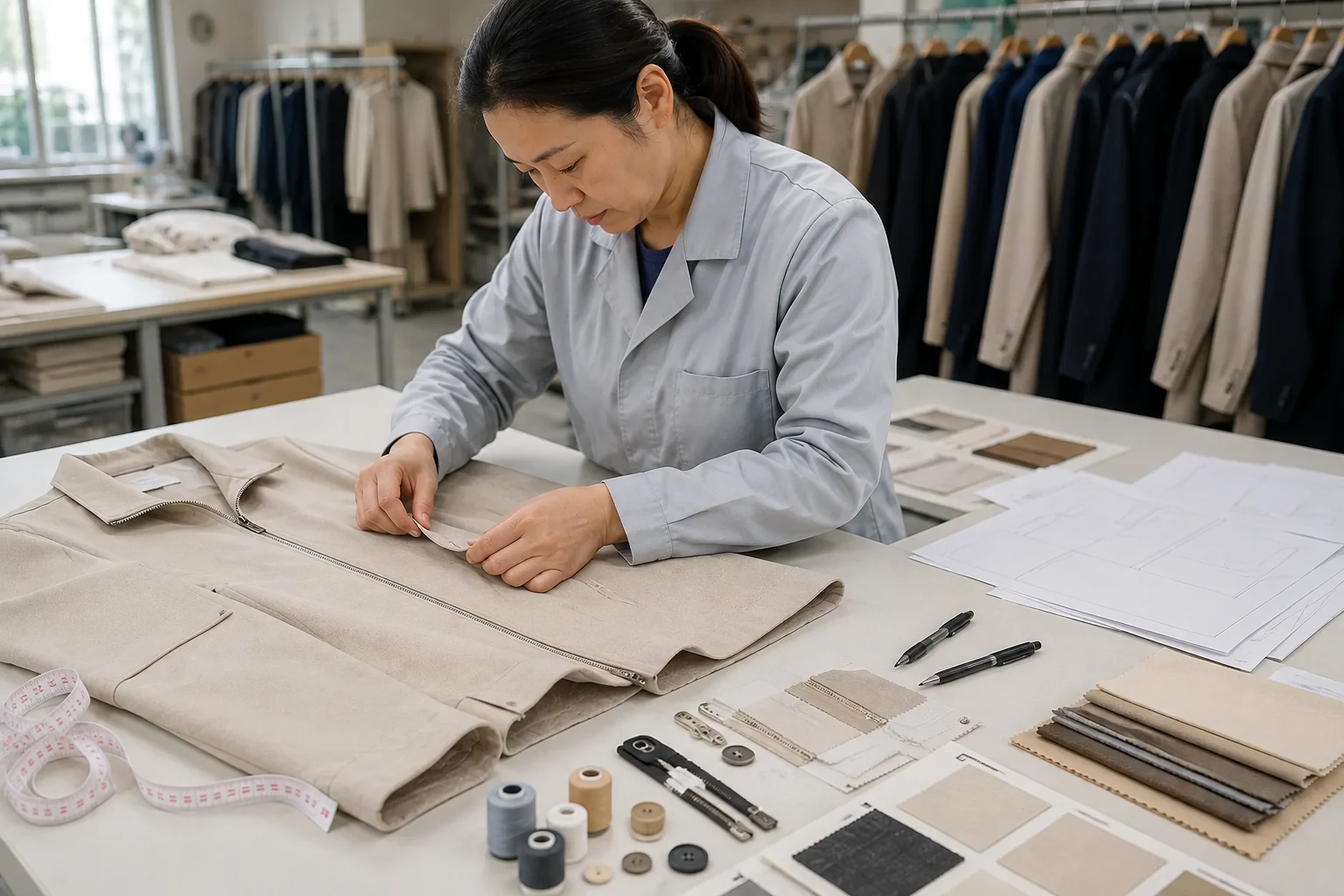
Technical review
Review reference materials, measurements, construction, quantity and target timing.
Material confirmation
Select or source appropriate fabric and trims, then confirm the choices before sample cutting.
Pattern & sample
Develop the pattern and first sample, recording assumptions that require the brand’s approval.
Measure, review & revise
Check fit, dimensions, workmanship and finishing; document revisions before bulk approval.
A typical sample at RÊVE JARDIN takes approximately one to two weeks after the necessary product information and core materials are confirmed. Complex construction, special sourcing or additional revision rounds may require more time.
During review, look beyond the silhouette. Check critical measurements, neckline or waistband recovery, seam appearance, pocket position, left-right balance, internal finishing and—where relevant—how the fabric behaves after washing.
5. Make Material Approval Traceable
Fabric determines much of a garment’s hand feel, drape, colour and durability. The specification therefore needs to go beyond a colour name or a reference photograph.
Confirm the fibre content, fabric construction, weight, surface finish and any performance requirements that matter to the product. For trims, identify important details such as zipper type, button material, interlining, labels, drawcords and packaging.
No silent substitutions
If the selected fabric or trim becomes unavailable, the alternative should be presented clearly and approved before it enters production. The approval method may include a physical swatch, detailed images, video or a replacement sample, depending on the risk.
Brands can supply their own fabric, or ask RÊVE JARDIN to source suitable fabrics and trims through its supply network. In both cases, the final choice and any acceptable tolerances should be recorded before bulk cutting.
6. Examine Quality Control Throughout Production
Final inspection can identify defects, but it cannot efficiently correct every problem after the garments are complete. Effective quality management begins with an approved sample and continues through material preparation, early production, finishing and packing.
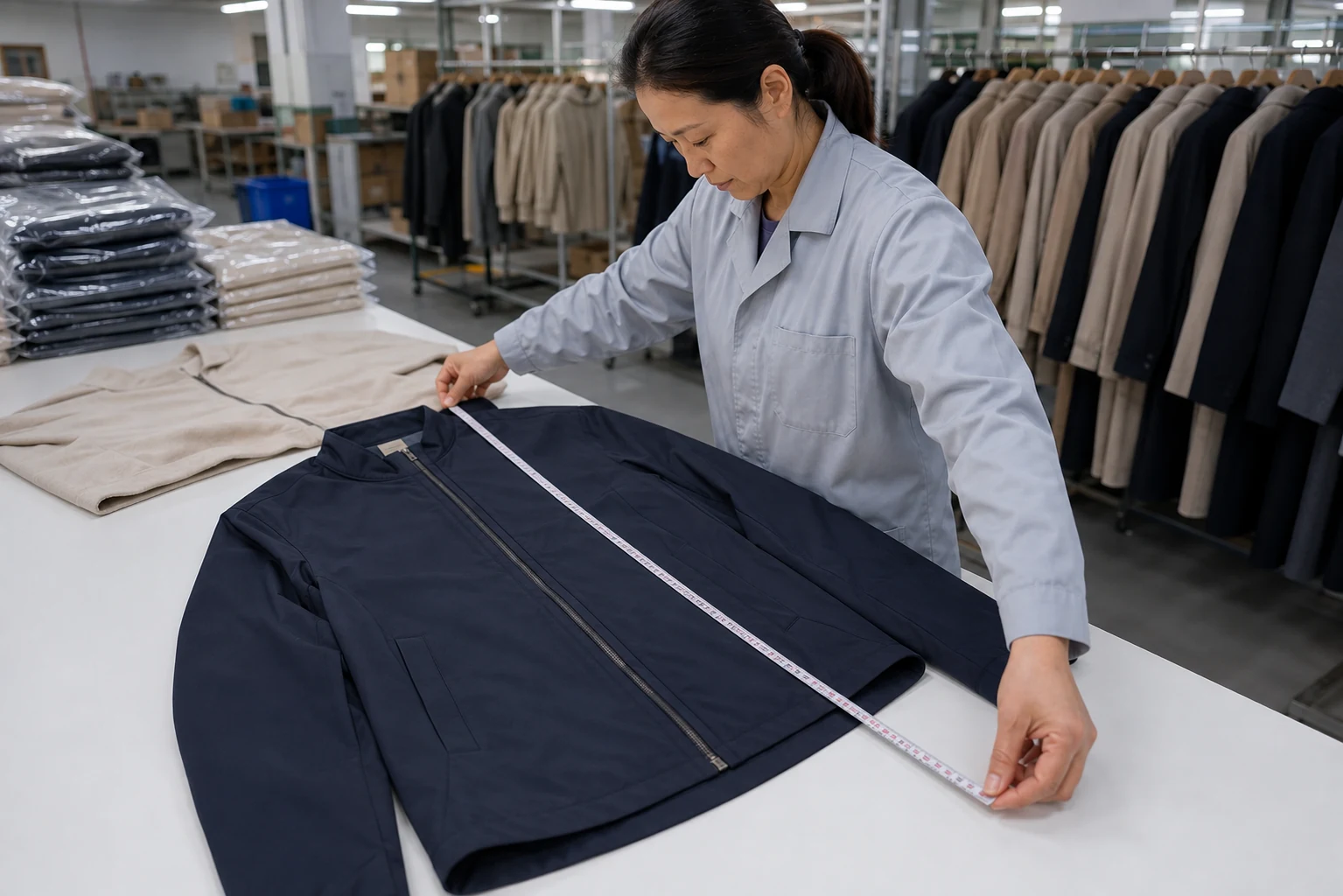
Check the confirmed fabric, visible flaws, colour consistency and any agreed preparation or test requirements.
Review early pieces against the approved sample and specification before the full run progresses.
Monitor critical measurements, stitch quality, symmetry and recurring workmanship issues.
Inspect appearance, measurements, finishing, labels and packing according to the agreed plan.
Inspection level, tolerances, test requirements and needle-control procedures should be agreed for each product and destination market. If your company requires a sampling plan such as AQL 2.5, third-party inspection or a specific detector sensitivity, include it in the production specification rather than assuming it is universal.
7. Build the Schedule Around Approval Milestones
“About one month” is not a production plan. A useful schedule states what must be approved before the next phase can begin and distinguishes production time from international delivery time.
| Milestone | What must be clear | Main risk to timing |
|---|---|---|
| Project review | Design, specifications, quantity and target date | Missing product information |
| Sample approval | Fit, measurements, construction and finishing | Unrecorded revisions |
| Material readiness | Fabric, trims, labels and packing materials | Custom or unavailable components |
| Bulk production | Approved standard and planned checkpoints | Late changes after cutting |
| Inspection & handover | Release criteria, packing and shipping arrangement | Confusing ex-factory with arrival date |
Most RÊVE JARDIN bulk orders take approximately three to six weeks after sample approval and material confirmation. The project-specific schedule depends on quantity, construction, processing and material availability. Freight and customs time should be planned separately.
8. Confirm Who Is Accountable for the Result
Buyers often frame the choice as “factory or trading company,” but the more useful question is: who owns the communication, technical follow-up, quality checks and problem resolution?
A single specialist factory may be an excellent fit for one stable category. A sourcing agent may provide access to a wider supplier base. A manufacturing-and-trading partner can combine a production base with selected partner factories for products that need different expertise.
RÊVE JARDIN is an integrated apparel manufacturing and trading company in Dalian, with its own production base and a stable partner-factory network. The production route is selected according to the garment, while RÊVE JARDIN remains the central point for communication, coordination and quality follow-up.
Ask for clarity before placing an order
Where will the sample be developed? Where is bulk production expected to run? Who approves materials? Who reports progress? Who makes the decision if the approved specification cannot be met?
The Pre-Quote Checklist: 10 Questions to Ask
- Category experience: Have you produced garments with similar materials and construction?
- Quotation inputs: What information do you need to prepare an accurate quotation?
- MOQ structure: Is the minimum calculated per style, colour or material?
- Development input: Can you review sketches, a tech pack or a physical reference sample?
- Material approval: How will fabrics, trims and any substitutions be confirmed?
- Sample timing: What is the expected first-sample timing and how are revisions handled?
- Production checks: Which measurements and workmanship points are checked during the run?
- Final inspection: What inspection, testing or needle-control requirements need to be specified?
- Communication: Who will own daily coordination and technical follow-up?
- Problem resolution: How are goods outside the agreed specification reviewed and resolved?
When RÊVE JARDIN May Be the Right Fit
RÊVE JARDIN works best with brands that value clear development, material and construction consistency, dependable communication and repeatable production.
Price-only sourcing
- Orders judged only by the lowest possible unit cost
- Unverified ready-stock or drop-shipping requirements
- Projects with no time for sample or specification approval
Quality-focused collections
- Growing and established apparel brands
- Cut-and-sew, woven and selected outerwear programmes
- Orders from around 100 pieces per style, subject to feasibility
- Brands seeking long-term, repeatable production
Based in Dalian, China, we support cut-and-sew apparel, woven garments, lightweight outerwear, and padded or down styles. Our standard process covers project review, material sourcing, sample development, production planning, bulk manufacturing, quality checks and export handover. Communication is available in English, Japanese, Chinese and Korean.
Frequently Asked Questions
What is a typical MOQ for apparel OEM production in China?
MOQ varies by product, fabric, colour count and customisation. At RÊVE JARDIN, production can generally be discussed from 100 pieces per style. Final feasibility depends on the design and material conditions.
How long does apparel sample development take?
A typical sample takes approximately one to two weeks after the required product information and core materials are confirmed. Complex construction or special sourcing may require more time.
Can you begin with reference images instead of a complete tech pack?
Yes. Reference images, sketches or a physical sample can be used for an initial review. We will identify which measurements, construction details and material decisions still need to be confirmed.
How can an overseas brand control garment quality before shipment?
Start with an approved sample and written specification, then agree on material checks, in-process checkpoints, final inspection criteria and any required testing or third-party inspection.
Is RÊVE JARDIN a factory or a trading company?
We are an integrated apparel manufacturing and trading company in Dalian, with our own production base and a stable partner-factory network. We select a suitable production route for each product while remaining responsible for communication and quality follow-up.
Plan Your Next Collection
A successful production run starts with early technical alignment. To begin a practical review, send us:
- Reference images, sketches, a tech pack or a physical sample
- Expected quantity and size or colour breakdown
- Preferred fabric, hand feel or performance requirements
- Target delivery window and primary sales market
Our team will review the product, material availability and timing before recommending the next step.
START WITH YOUR PRODUCT DETAILS
Build the right production plan
before bulk begins.
Send your reference images, specifications, expected quantity and target timing. We will review whether the project fits our production capabilities.
Discuss your collection